
Engagement Rings Education Hub
16 January, 2026
Choose our Cork or Dublin Showrooms
Why It Matters, Who to Trust & What to Watch Out For
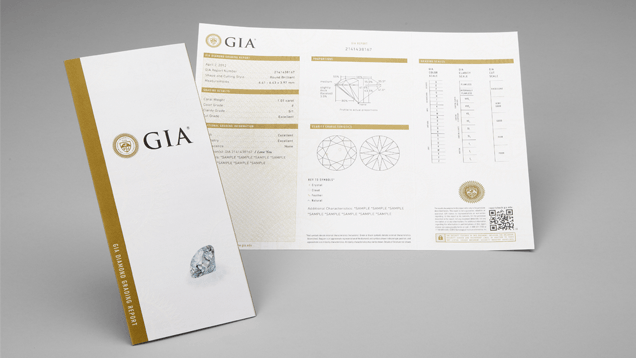
A diamond certificate—also known as a grading report—is an independent document issued by a gemological laboratory detailing the specific characteristics of a diamond. It verifies what you’re buying, giving you a trusted assessment of a diamond’s:
✅ Think of it as the diamond’s passport—proof of identity, quality, and value.
In Ireland (and globally), reputable jewellers only sell certified diamonds—especially for engagement rings and fine jewellery. Here’s why:
⚠️ Never buy a diamond without independent certification—especially online.
Not all diamond labs are equal. Some are stricter, others more lenient. Here’s how the three most common labs compare:
| Grading Lab | Trust Level 🔒 | Strictness ⚖️ | Common in… | Best For… | Notes |
|---|---|---|---|---|---|
| GIA (Gemological Institute of America) | ⭐⭐⭐⭐⭐ | Very strict | Global | Buyers wanting top accuracy | Known for consistency and conservative grading |
| IGI (International Gemological Institute) | ⭐⭐⭐⭐ | Moderate | Popular for lab-grown diamonds | Great value and accessibility | More lenient than GIA, but improving |
| HRD (Hoge Raad voor Diamant, Belgium) | ⭐⭐⭐ | Moderate | Europe (esp. Antwerp) | EU-based buyers and retailers | Less common now, variable strictness |
| ❌ In-house or Retailer Certificates | 🚫 | Often inflated | Budget retailers, some online stores | Should be avoided | No independent verification—biased grading |
Pros: Highest industry reputation, strictest grading, global resale confidence
Cons: Slightly more expensive due to prestige
Pros: Affordable, fast turnaround, widely recognised
Cons: Grading may be 1 clarity or colour grade higher than GIA
Pros: Good for regional diamonds, transparent reports
Cons: Grading standards not as consistent as GIA or IGI
Some retailers issue their own grading reports to avoid independent scrutiny. These often overgrade colour or clarity to inflate value.
🚫 Avoid diamonds with only in-house or brand certificates.
Always ask: “Who certified this stone?”
If it’s not GIA, IGI, HRD, or another trusted lab, walk away.
🛑 An overgraded SI2 diamond may look like an SI1 on paper—but not to your eyes or wallet.
A proper diamond grading report should include:
No. Only independent, internationally recognised labs are trustworthy. GIA remains the most consistent and strict.
Slightly—but the added security and resale value far outweigh the cost difference.
Yes—reputable sellers of lab-grown diamonds use IGI or GIA certificates for full transparency.
Insist on third-party certification. In-house grading is never impartial.
Mitigation Tip: Always request a certified stone from a reputable lab, and cross-check the serial number online.
A diamond is more than a purchase—it’s a promise, a memory, a legacy. Certification protects that promise by verifying exactly what you’re buying, and shielding you from overpaying or being misled.
Whether you’re buying in-store or online in Ireland, stick to GIA, IGI or HRD certificates—and never settle for a self-graded gem.
💎 When it comes to diamonds, the right paper is worth its weight in gold.

Don't miss
16 January, 2026

16 January, 2026
16 January, 2026